
Download Composition Documentation*
Electroacoustic Composition 9
A Chill Breeze (Electroacoustic) (2009/10)
Single Movement for amplified orchestral harp and tape
Revised and rearranged (2021), remixed and remastered (2024)
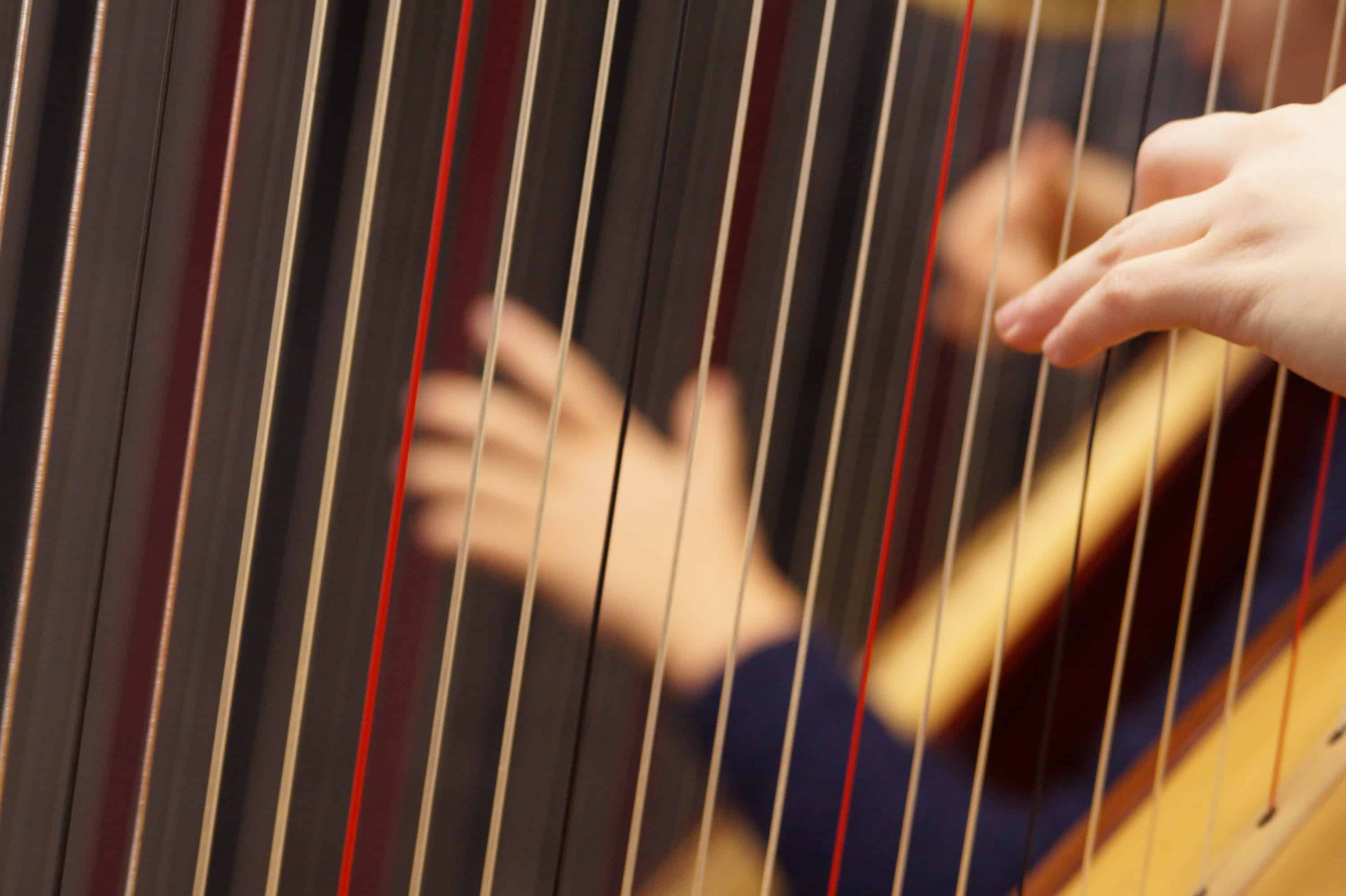
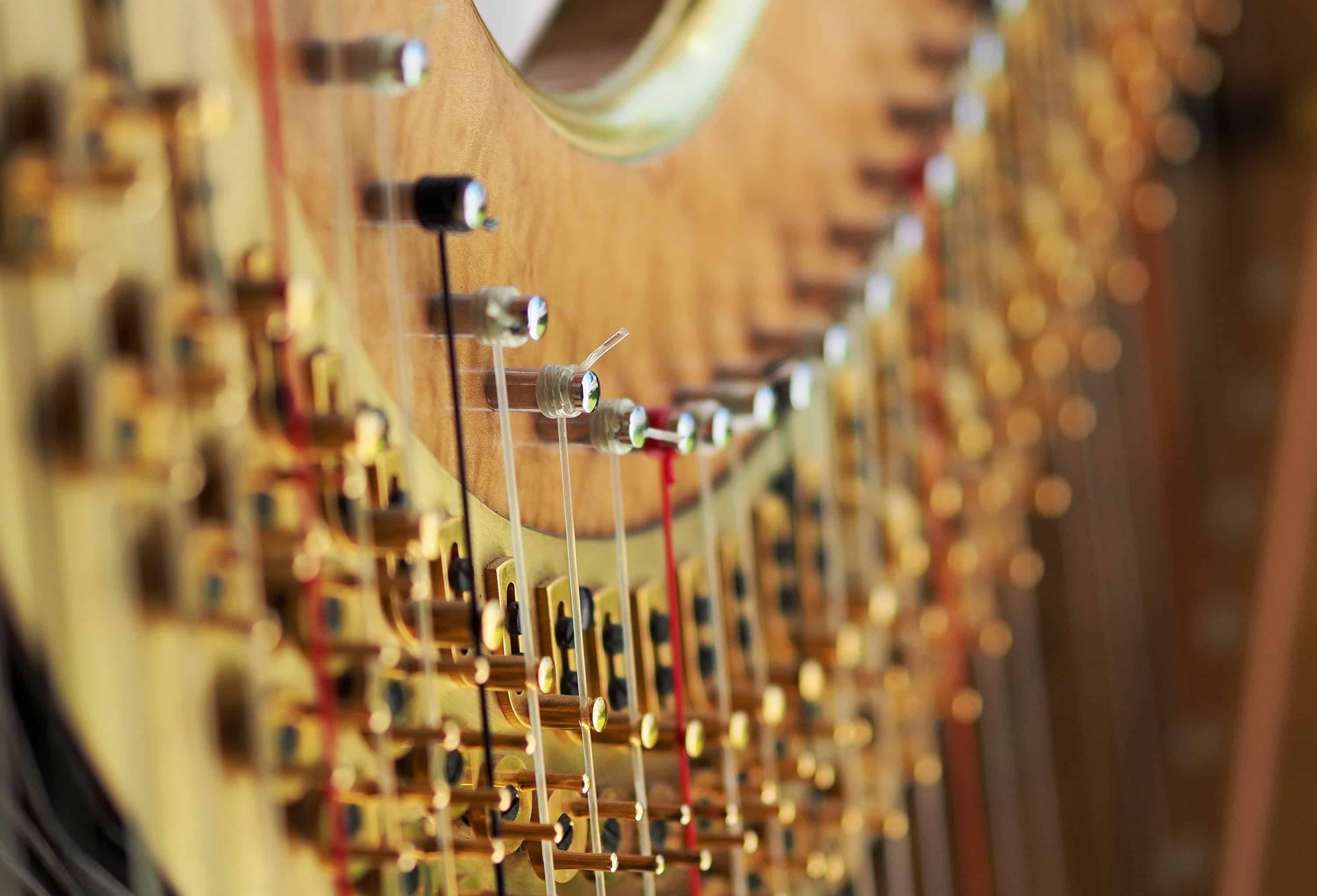
AChill Breeze was initially composed as a solo piece for pedal harp between December 2009 and January 2010 whilst most of the UK was enveloped by a sheet of ice. The acoustic soundworld evokes aural images of Aeolian harps and frozen time (or timeless motion). Part of a series of works, it is a short, but virtuosic single movement exploring modal clusters, simple modulation and ambiguous consonances.
This electroacoustic version was first realised during 2010. The concrete audio was composed around an altered arrangement of the pre-existing acoustic part. Contrasting the intimate soundworld instinctively associated with the instrument, the concrete parts reinvent the single sound source amidst powerful gestures and primal screams, whilst combined medium unite in symbiosis along the way to enhance the idiomatic timbres and natural resonant atmosphere immediately recognisable as the sound of the harp. The piece was rearranged in August 2021, so the score was revised and the studio recording remixed and remastered.
Amplification and Diffusion:
Ideally, the concrete parts should be diffused to multiple stereo, summated mono and sub-bass (LFE) speakers. Preferably in an equidistant circle of four pairs spaced around the audience. The summated mono (fed by Aux sends) and sub-bass speakers should be placed in the centre of the audience. Other premixed versions of the concrete audio can be made available upon request.
The live parts should be mixed to a/b stereo (equal space either side of the central musician) through a two, four, or six speaker, front and centred pair/half-circle and the volume should then remain fixed throughout the performance. It is preferable if the live part has its own dedicated speakers (be it 2, 4 or 6). The musician will need a stage monitor and it would be very helpful if they could also read the playback time from the concrete audio.
Alternatively, in an intimate setting such as a solo chamber recital, the harpist could sit between two loudspeakers, with the volume balanced to match the acoustic resonance of the instrument, or amplify the live sound a little through a small mixing desk into the same speakers as the concrete sounds. A laptop feeding the concrete sounds to two good quality bluetooth speakers, could also offer a suitable mix (and a less invasive visual) within the acoustic resonance of some recital halls. The musician has plenty of time to settle after pressing play.
Acknowledgement:
Thanks go to American concert harpist Chilali Hugo for recording the primary sound material from which this piece was composed and for premiering both original versions of A Chill Breeze (Electroacoustic and Acoustic) in October and November 2010. Further thanks are owed for recording a studio realisation of both versions. Thank you Chilali ...
View Pdf :
Direct Pdf Link :
A Chill Breeze (Acousmatic) (2025)
Single movement for multiple loudspeaker analogue diffusion.
A Chill Breeze Acousmatic (2025)
In October 2024, the composer stumbled across a new reverb that he knew would be perfect for the studio recording of this piece. The electroacoustic score had been revised in 2021 and the studio recording was remixed and remastered at that time, but the mix had never truly gelled.
Armed with a new reverb, the composer immediately set about remixing the project. The 2024 remixed and remastered version is now available from the link at the top of this page, and is far more convincing than its predecessor. This task proved to be the catalyst to a journey of electroacoustic stocktaking and reflective self-critique that has taken a year to complete. Thanks for that Chill Breeze!
It seems fitting that a year later (October 2025) rendering and mastering this acousmatic version of A Chill Breeze (without the live parts) is the last item listed on my stock-check ‘to-do’ list: Yay!
Perhaps I will stocktake my electroacoustic portfolio again in another couple of decades?
View Pdf :
Direct Pdf Link :
Additional Resources ...
A sound palette of 42 mono audio samples exploring the soundworld of the orchestral harp used as the single sound source for this piece. The files are available to use as open access source recordings for electroacoustic and acousmatic composers (66 MB of 16bit Wave Audio).